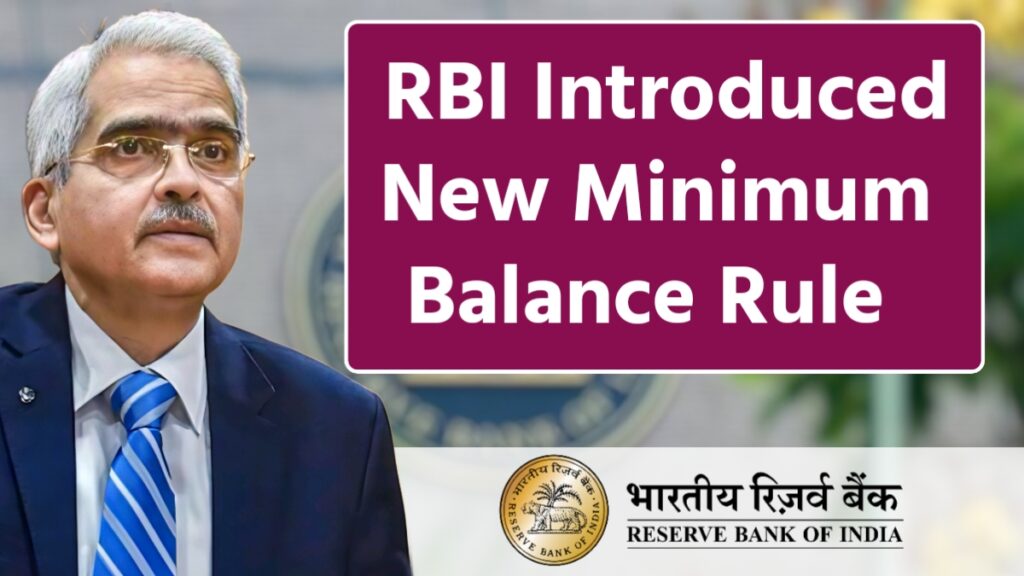
New RBI Minimum Balance Rules: India’s banking system is preparing for another regulatory adjustment as the Reserve Bank of India (RBI) moves to clarify how minimum balance rules are applied across savings and current accounts. According to reports, a revised framework related to average monthly balance (AMB) requirements may begin taking effect around March 10, 2026. The update has attracted attention because many bank customers have long complained about inconsistent balance rules across branches, cities, and institutions.
For years, account holders in metro cities often faced higher minimum balance expectations compared with customers in semi-urban or rural areas. However, the calculation methods, penalty slabs, and communication practices varied widely between banks. As digital banking usage expanded and customers began managing accounts across multiple locations, these inconsistencies became more noticeable.
The latest regulatory clarification aims to encourage greater transparency in how banks define minimum balance expectations and inform customers about potential charges. In practical terms, the move is expected to make balance requirements easier to understand, although individual banks will still retain authority to define certain operational details. The development reflects a broader effort to align traditional banking practices with modern digital usage patterns.
Regional Balance Benchmarks Likely to Guide Account Policies
Based on available information, the revised structure may introduce clearer reference benchmarks for savings accounts depending on location categories. Metro and urban branches could typically expect an average monthly balance of around ₹3,000, while semi-urban and rural branches may operate with lower expectations of approximately ₹1,500. These figures reflect differences in income patterns, living costs, and banking behaviour across regions.

However, the benchmarks should not be interpreted as a universal fixed rule for every account holder. Individual banks may still design specific products with higher or lower balance conditions depending on service features. Premium accounts, bundled services, or accounts linked with investment products may carry different requirements. In practical terms, customers should treat the benchmarks as broad guidance rather than a single nationwide mandate.
Why Regulators Are Revisiting Traditional Minimum Balance Systems
India’s financial ecosystem has evolved rapidly over the past decade. Digital payments, mobile banking applications, and the widespread use of the Unified Payments Interface (UPI) have significantly changed how customers interact with their bank accounts. Despite these changes, many banks continued using older branch-centric systems to calculate average balances and penalty charges.
A banking sector analyst explained the shift this way: “As customers move between cities and operate accounts through mobile platforms, the traditional branch-based rulebook begins to create confusion.” According to reports, regulators observed a rise in customer complaints related to unexpected deductions caused by unclear balance formulas. The revised framework may encourage clearer communication from banks and reduce misunderstandings around monthly balance requirements.

Possible Effects on Salaried Workers, Students and Small Traders
For salaried individuals who receive regular monthly income, maintaining an average balance of a few thousand rupees may not significantly disrupt budgeting. Many payroll accounts already maintain balances above such thresholds. However, students, pensioners, freelancers, and small traders with irregular cash flow could experience the rules differently depending on how they manage their accounts.
Consider the example of a freelance designer who maintains multiple bank accounts—one for client payments, another for savings, and a third for automated subscriptions. If subscription debits reduce the balance during part of the month, the average monthly balance may fall below the required level even if funds are restored later. Under bank policies, penalty charges may apply in such situations depending on the account category.
How Earlier Bank Policies Often Differed Across Institutions
Historically, minimum balance rules in India have varied significantly between public and private sector banks. Public banks generally maintained relatively modest balance requirements, particularly in semi-urban or rural branches. Private banks operating in metropolitan locations often applied higher thresholds tied to additional service features such as debit card privileges or bundled insurance products.

Another source of confusion was the penalty calculation method. Some banks imposed fixed charges for balance shortfalls, while others used percentage-based calculations linked to the amount of deficiency. Customers who changed jobs or relocated to another city sometimes discovered new requirements only after deductions appeared in their account statements. The current regulatory push aims to reduce such unexpected surprises.
Digital Alerts and Basic Savings Accounts as Alternatives
At the same time that balance rules are being clarified, banks are increasingly encouraging customers to explore basic savings accounts that do not require a minimum balance. These accounts are commonly associated with financial inclusion programmes and are designed to ensure essential banking access for low-income households. However, such accounts may come with limits on free transactions or certain service features.
Another change involves improved real-time notifications. Many banks now provide mobile app alerts or SMS reminders when balances approach the minimum threshold. In practical terms, these alerts may help customers transfer funds before a shortfall occurs. However, verification is recommended because transaction timing, cheque clearing cycles, and scheduled automatic payments can influence the final average monthly balance calculation.

Understanding the Difference Between Balance and Average Balance
One common misunderstanding among account holders is the difference between a closing balance and the average monthly balance (AMB). Minimum balance rules typically refer to the AMB rather than the amount available on the final day of the month. The AMB is calculated by adding the end-of-day balance for each day in the month and dividing the total by the number of days.
This means that even if a customer maintains ₹5,000 in the account for the first half of the month, a sharp drop during the remaining days could reduce the overall average below the required threshold. According to guidelines, understanding this calculation method is important because penalties are generally linked to the monthly average rather than a single-day snapshot of the account balance.
Monitoring Bank Notifications Before New Norms Take Effect
Banks are expected to communicate any revised requirements through SMS notifications, mobile banking apps, emails, or official website updates. Customers who maintain multiple accounts may find it useful to review dormant or rarely used accounts before the new framework becomes operational. Consolidating accounts or adjusting automated debit instructions could help maintain stable balances.
Special categories such as senior citizen accounts, student accounts, or government-linked basic savings products may receive relaxed conditions depending on bank policies. Because operational details can differ across institutions, verification through official bank communication channels is recommended. Checking monthly statements and enabling balance alerts may help account holders stay informed about any changes.
Disclaimer: This article is based on publicly available information and emerging updates regarding banking regulations. Minimum balance benchmarks, penalty structures, and exemptions may vary depending on the bank and the specific account type. Readers are advised to verify the latest guidelines directly with their bank or through official notifications before making financial decisions.